Wholesale & distribution
POS and accounting for wholesale and van distribution
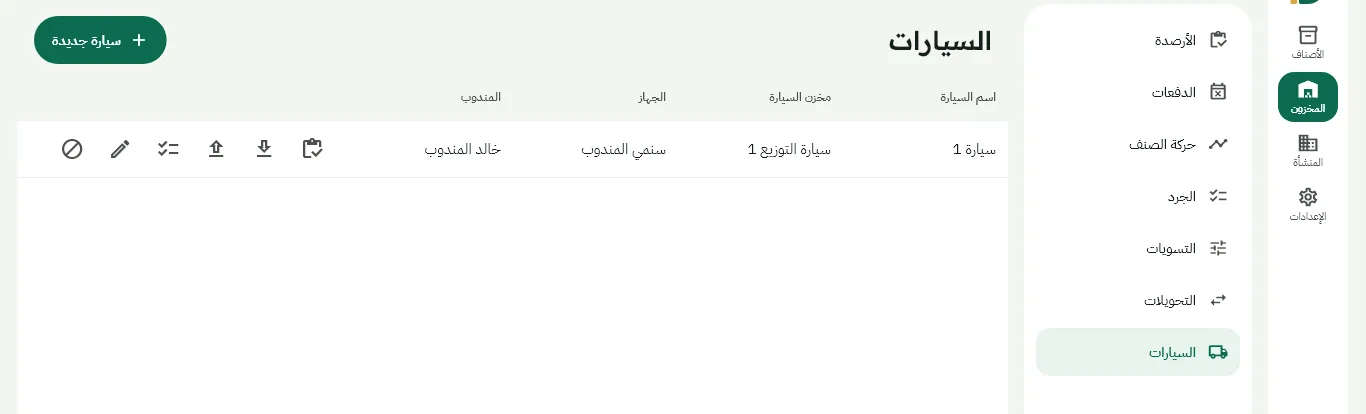
Direct ERP is sales and accounting software for food wholesalers and distribution companies in Saudi Arabia: each sales rep's van is a warehouse tied to the rep's device, loaded by transfer, unloaded and counted, and the rep sees the day's visits and sells, collects or takes a return even when the internet drops. The back office has quotations, sales orders and standard tax invoices, credit limits, debt ageing and statements, and purchasing with approval and landed cost — all in one general ledger.
The rep's day
Loading in the morning
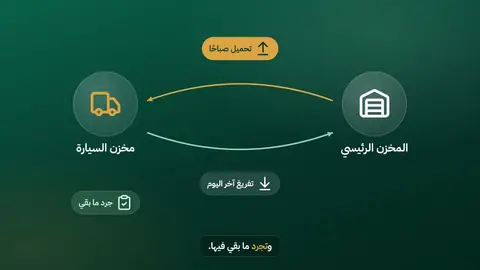
A transfer from the main warehouse to the van's warehouse, and the rep sees the same quantity on the device.
Today's visits
The customers for this weekday in the order you set, each with their balance beside them.
Selling and collecting
An invoice printed on the spot and taken out of the van's stock, a receipt voucher with the amount and the remaining balance, and returns by scanning the receipt. Above a credit limit the device asks for approval.
Unloading in the evening
What is left goes back by transfer, the van's count shows any difference with its reason, and a report per rep and day shows productive and unproductive visits.
The rep works on an Android device with a built-in printer, or a phone, offline, and uploads everything once when the connection returns. The product does not track the rep's location on a map and does not plan routes automatically.
The sales cycle for companies and shops
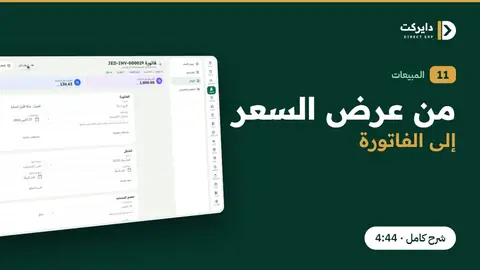
A quotation turns into a sales order that reserves the quantity, then one invoice or several. A standard invoice to a registered customer is sent for clearance before it is shared, and corrections are credit or debit notes from the original lines.
- Price lists VAT-inclusive or exclusive, and a list per branch
- Units with conversion factors: piece, box and carton
- A credit limit read from receivables, and an override recorded on the invoice
Purchasing and the true cost
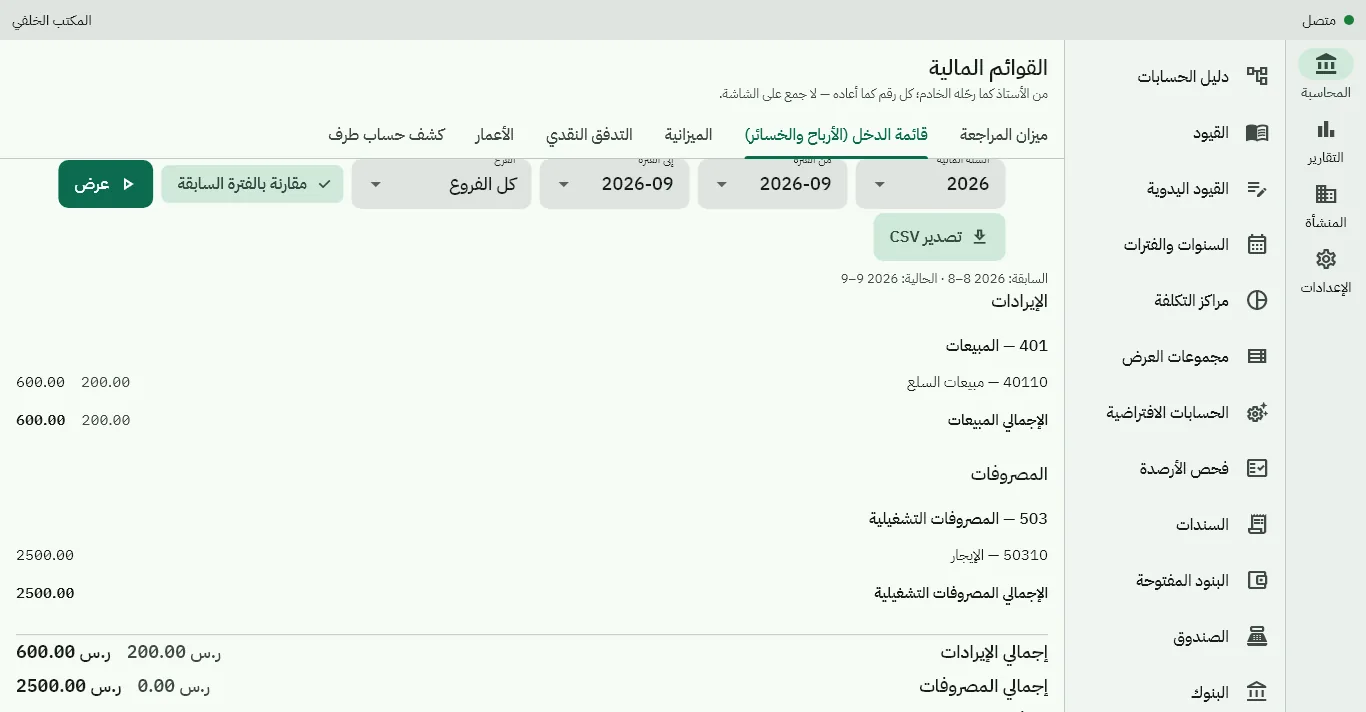
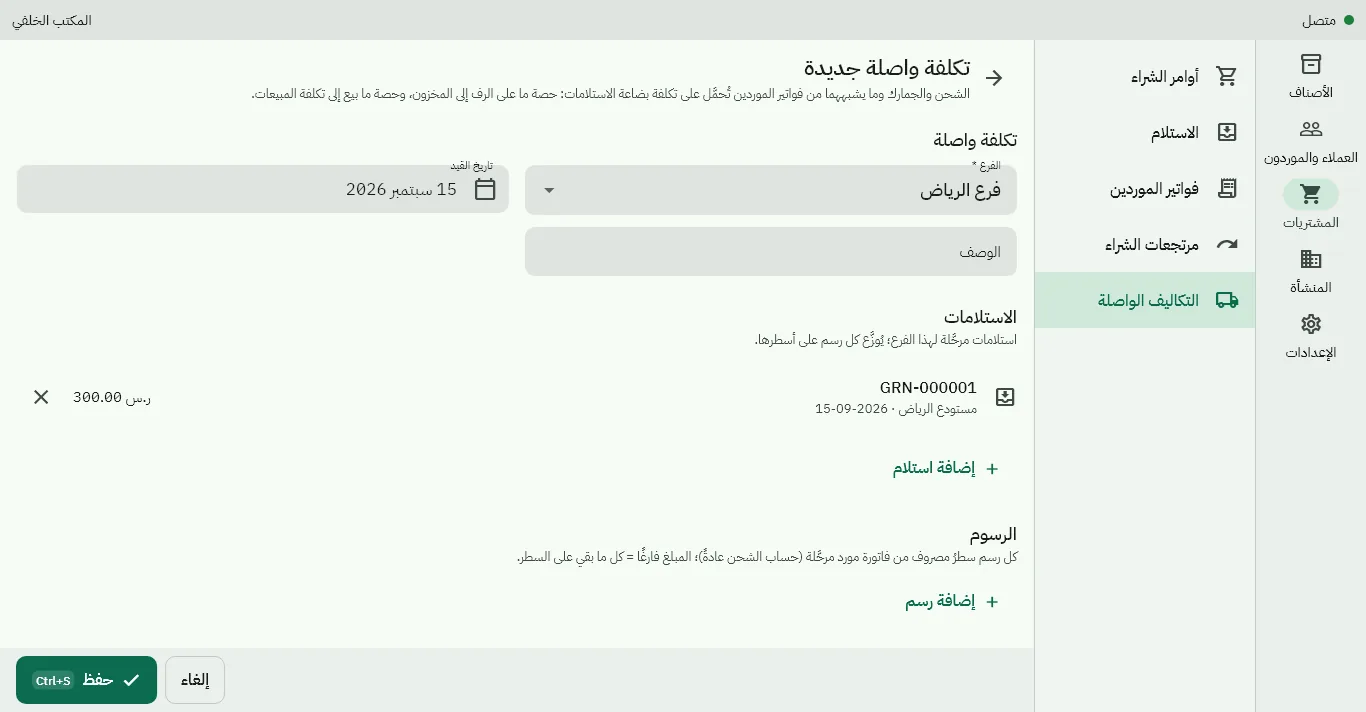
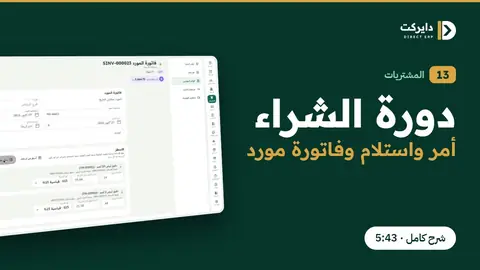
Purchase suggestions from reorder levels less what is ordered and not received, purchase orders with approval above a limit you set, receipts by quantity, and supplier invoices matched to receipts. Landed cost spreads freight and clearance over the items by value or quantity, so the weighted average knows your real cost.
Receivables and the books
Receivables
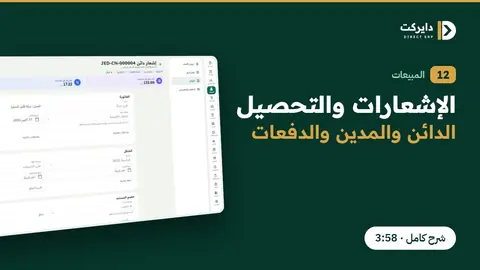
A statement for each customer and supplier, debt ageing, receipt and payment vouchers allocated to invoices, and incoming and outgoing cheques.
Accounting →Inventory
Weighted average per warehouse, batches and expiry dates, transfers and barcode counts.
VAT
The VAT return from the entries themselves, and every e-invoice with the tax profile of its day.
E-invoicing →Payroll
A monthly payroll with GOSI and the end-of-service provision, posted as one entry.
On video
Frequently asked questions
Is the van a real warehouse in the product?
Yes. Each van is a warehouse tied to the rep's device, loaded and unloaded by transfer and counted, and every sale comes out of it.
Does the rep keep working when the internet drops?
Yes: selling, collecting, returns and printing the voucher on the device without a connection, uploaded once when it returns.
What if two reps sell to one customer offline and exceed the limit?
Each device checks the limit with what it knows; a signed invoice is not refused when it arrives — it is accepted and the owner is alerted to follow up.
Does it track the rep's location?
No. It tracks the van's stock, visits, sales and collections, not its position on a map.
Does it issue standard tax invoices to registered shops?
Yes, with the customer's name, VAT number and address, cleared before sharing in phase 2.
One van is enough to try it
We set up a van, a rep and a visit route with you; sell and collect offline, then see everything in the books.