Inventory & purchasing
Know what you have, and buy only what you lack
Every sale, receipt and transfer moves the stock ledger at once, at the weighted average cost of each warehouse, and its value in the ledger matches its quantities. Purchasing runs from order to receipt to supplier invoice in one path.
Inventory
Weighted average
A cost per item in each warehouse, computed to the halala, and recomputed when a back-dated document arrives — by a difference entry, never an edit.
Counts and adjustments
A count sheet filled by barcode, each difference with a reason from a fixed list, and waste and damage adjustments in their own accounts.
Transfers
Transfers between warehouses and branches with send and receive, and goods in transit visible.
Negative stock
A warning or a block, as the business chooses, and an alert to the owner when an offline till sells more than the warehouse holds.
Purchasing
Purchase orders with approval
An order above the limit you set for the branch waits for someone holding the permission, and nobody approves their own order.
Purchase suggestions
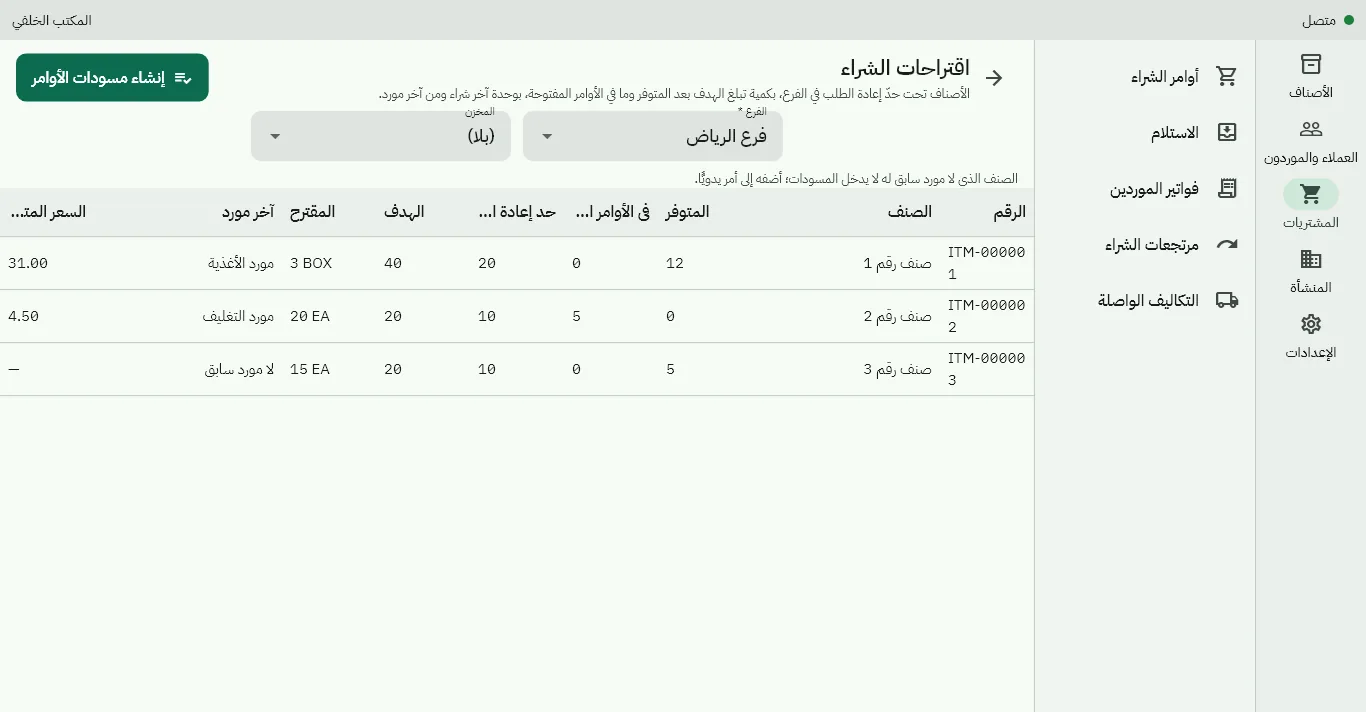
Items below their reorder level with the suggested quantity after stock on hand and on order, and one purchase order per supplier in a click.
Goods receipt
Full or partial receipt against the order, refusing damaged goods with a reason, and price labels for what was received.
Supplier invoices and returns
Matching the invoice to the receipt within tolerances you set, the price difference in its account, and supplier returns and credit notes.
Landed cost
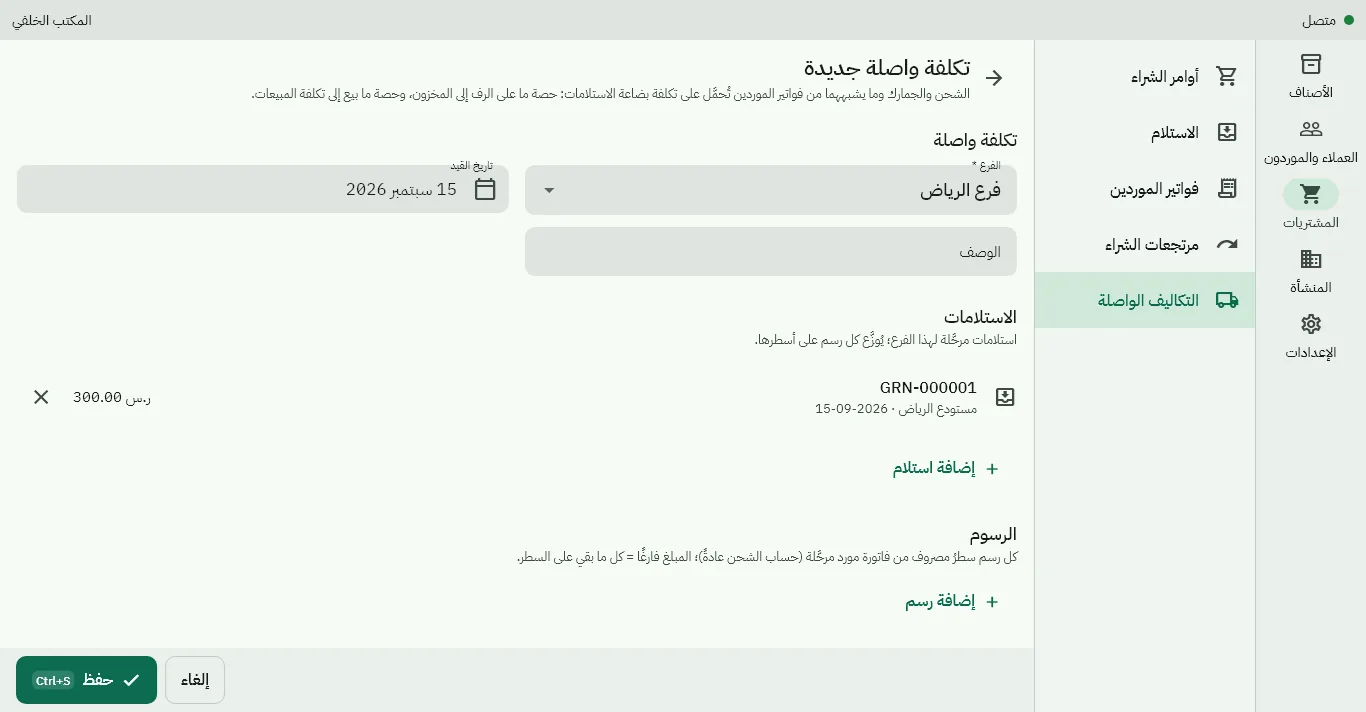
For importers: allocate freight and customs across receipt lines by value or quantity, so they enter the cost of the goods on the shelf — and what was already sold goes to cost of sales.
One warehouse or a network of branches
Each warehouse with its balance and cost, each employee with permission for their warehouse.
Chat on WhatsApp